The smart way to update resume for multiple job applications
Estimated read time: 6 minutes
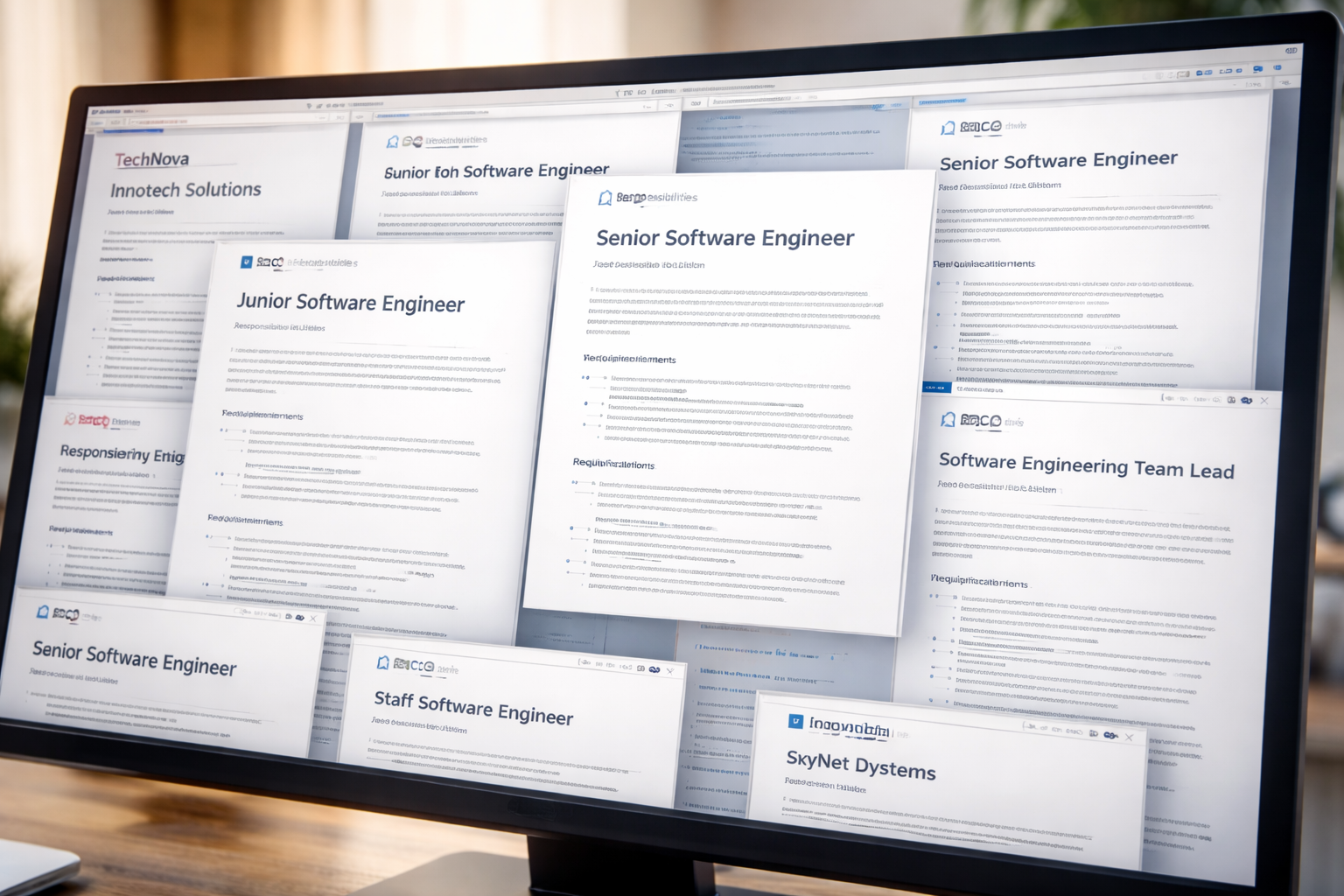
Updating one resume for many roles is where most job seekers lose time. You rewrite the same points, repeat the same context, and still wonder if your final version matches the role well enough.
A smarter approach is to run a structured loop: use AI chat to gather missing details, run role-fit analysis, update only what matters, and keep reusable context in memory so each next application is faster.
Why the old approach breaks at scale
Manual resume editing works for one application. It breaks when you apply to many roles because each job description asks for different emphasis, keywords, and evidence. A generic resume often underperforms in ATS screening and makes recruiter review harder.
The key is not to rewrite everything each time. The key is to refine intelligently: preserve your voice, adjust role-relevant sections, and update quickly with a repeatable workflow.
A practical workflow to write, refine, adjust, and update
- Start a dedicated session per job application. Keep one target role per session for cleaner decisions.
- Add the job description and your current resume or CV draft. You can start from an existing draft or from scratch.
- Use AI chat to fill context gaps. Share achievements, scope, impact, and constraints that are missing from the draft.
- Run role-fit analysis. Identify where your profile aligns, where it does not, and what to improve first.
- Apply targeted suggestions. Update high-impact lines first, then refine wording for clarity and evidence.
- Export and iterate. As role requirements change, repeat the loop instead of rebuilding from zero.
Tip: If your tool supports persistent memory, each loop gets easier because your background and preferences do not need to be re-entered every time.
What "intelligent resume updates" should actually mean
Intelligent does not mean random rewriting. It means decisions that improve role fit while staying truthful:
- Prioritize job requirements and close high-value gaps first.
- Keep your authentic experience and avoid fabricated claims.
- Optimize for ATS matching, recruiter scanning, and hiring-manager relevance together.
- Reduce repeated manual edits across multiple applications.
How memory improves multi-application speed
In most AI chat tools, every new session starts cold. In a memory-backed workflow, relevant context persists across sessions: your experience patterns, preferred framing, and previously clarified details.
This is what makes the process compounding. The first applications may take longer. Later updates become much faster because the agent already understands your profile and can generate higher-quality suggestions with less back-and-forth.
Applying this method in real situations
This method works whether you have a polished resume, an early CV draft, or no finalized document yet. You can start from whatever you currently have and improve from there.
A strong master resume is still useful, but it should be treated as a foundation, not a one-size-fits-all submission. For most job applications, role-specific adjustments improve relevance and interview potential.
To avoid over-editing for every role, use a gap-first process: identify the highest-priority mismatches, fix those first, and skip low-impact rewrites that do not materially improve fit.
Put this workflow into practice
ChatRefy is built for this exact loop: AI chat guidance, role-fit analysis, editable suggestions, and persistent memory that helps each next job application move faster.
Put this workflow into practice
Start free and apply this method with ChatRefy to refine your next resume or CV faster.